

Sqor Sports
Fangagement & Sqor Manager Overview
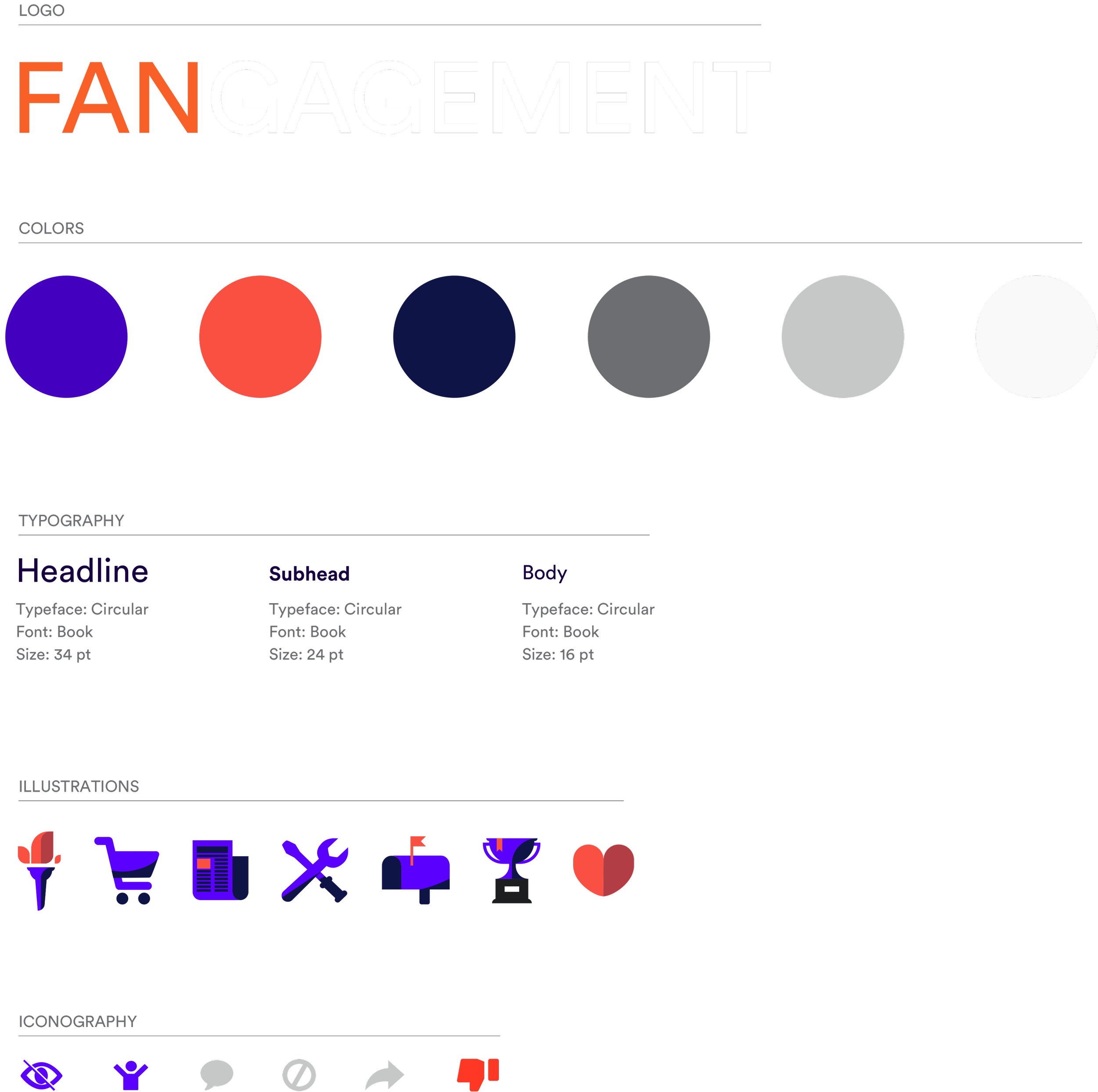
Created in 2014, Fangagement was an early exploration of how social interaction could be integrated into the sports experience. Many of the interaction patterns shown here have since become commonplace, but at the time we were defining how these behaviors could work within a new product category.
Fangagement
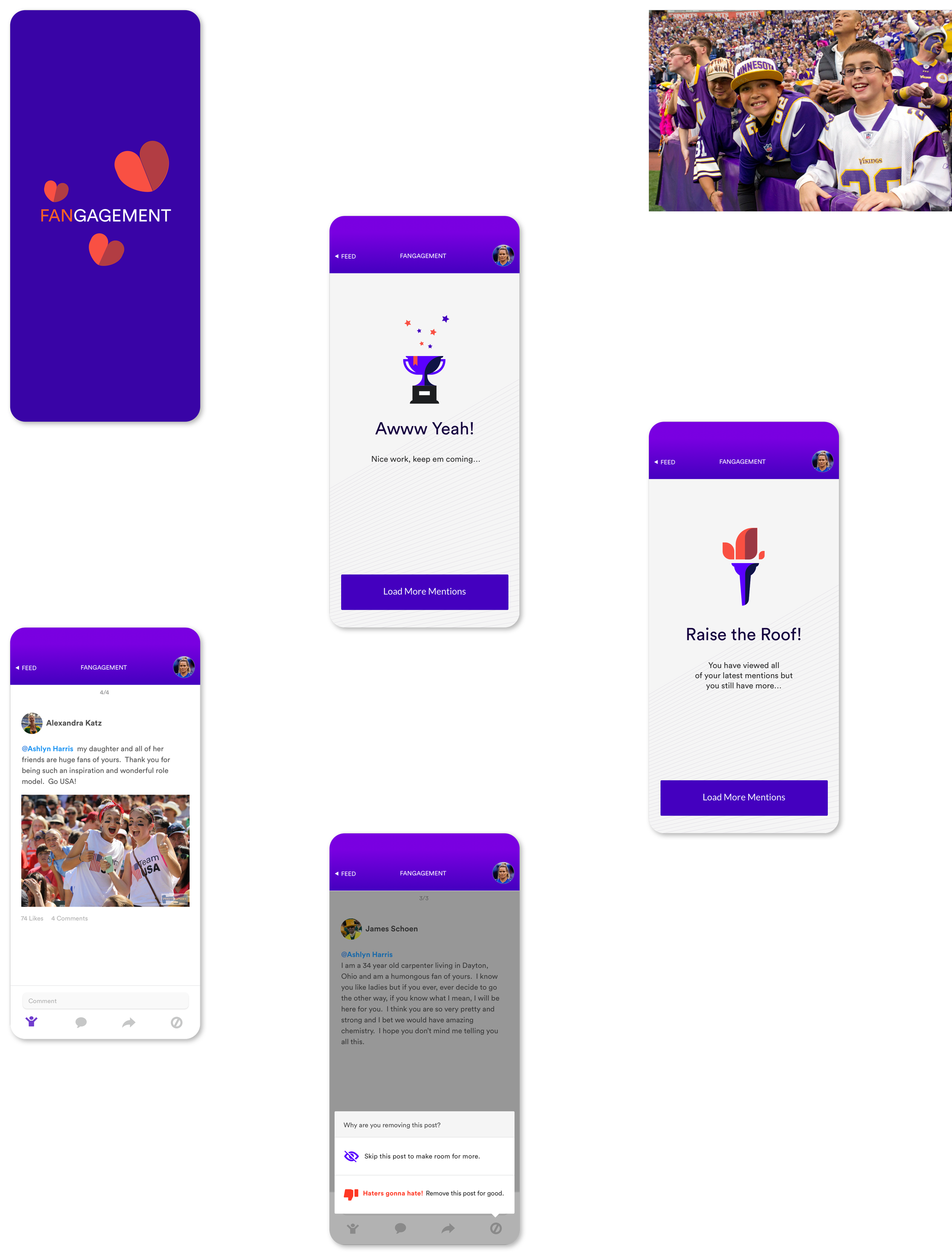
Fangagement is an aggregation tool for Sqor, a social media platform that connects sports fans with their favorite athletes, teams, and other passionate, like-minded fans. Sqor-verified athletes use Fangagement to rank, curate and even hide posts in which they are mentioned.
Athletes have more important things to do than monitoring and curating their various social platforms.
The Challenge
Fangagement is a simple and, more importantly, fun way for Sqor athletes to start conversations with the people that matter most, their fans.
The Solution


Sqor Manager is an enterprise tool that works in conjunction with Fangagment and the Sqor app. It provides athletes, teams, and agents with metrics on their content that measure engagement with their respective fans.
Sqor Manager
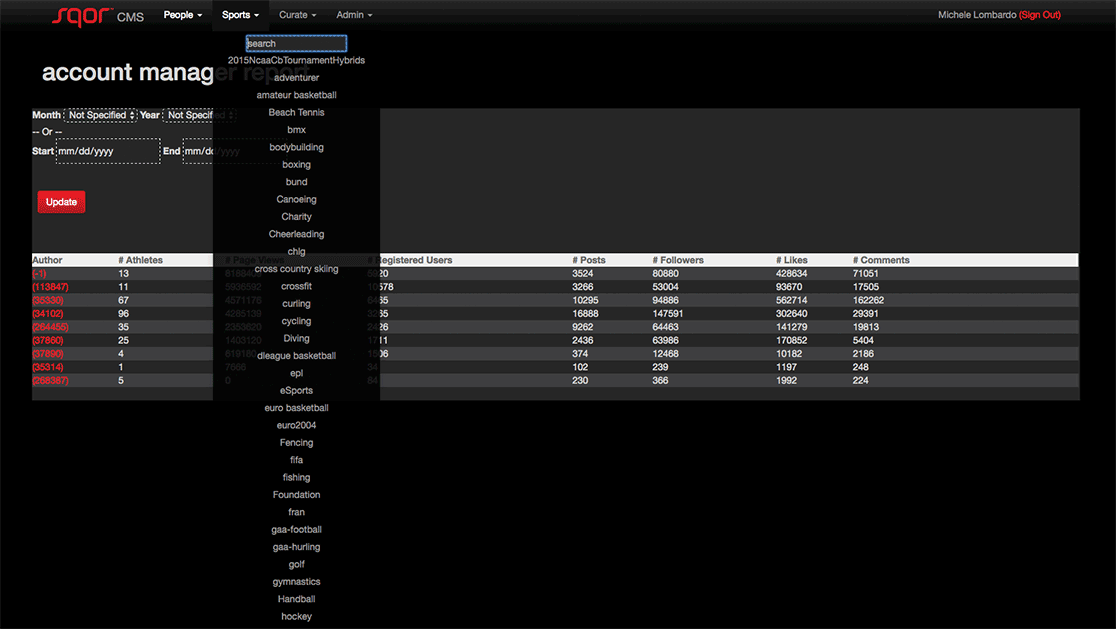
Athletes, agents, and managers need a quick and simple way to access data on their social media accounts. While Sqor had a management site in place, it was rudimentary and cumbersome. The site was set up for internal use only, leaving our agents to manually add each new verified athlete. In addition to the extra work it created, our search engine was not always dependable and usually produced long, unmanageable drop-down menus that extended far beyond the user’s window.
The Challenge
A complete redesign of the interface and backend. After creating a series of proto-personas and use cases, I developed a set of requirements that informed our roadmap for the next two months. The proto-personas ensured we could accommodate all users from every entry point and with different levels of access.
The Solution
Old Sqor Manager
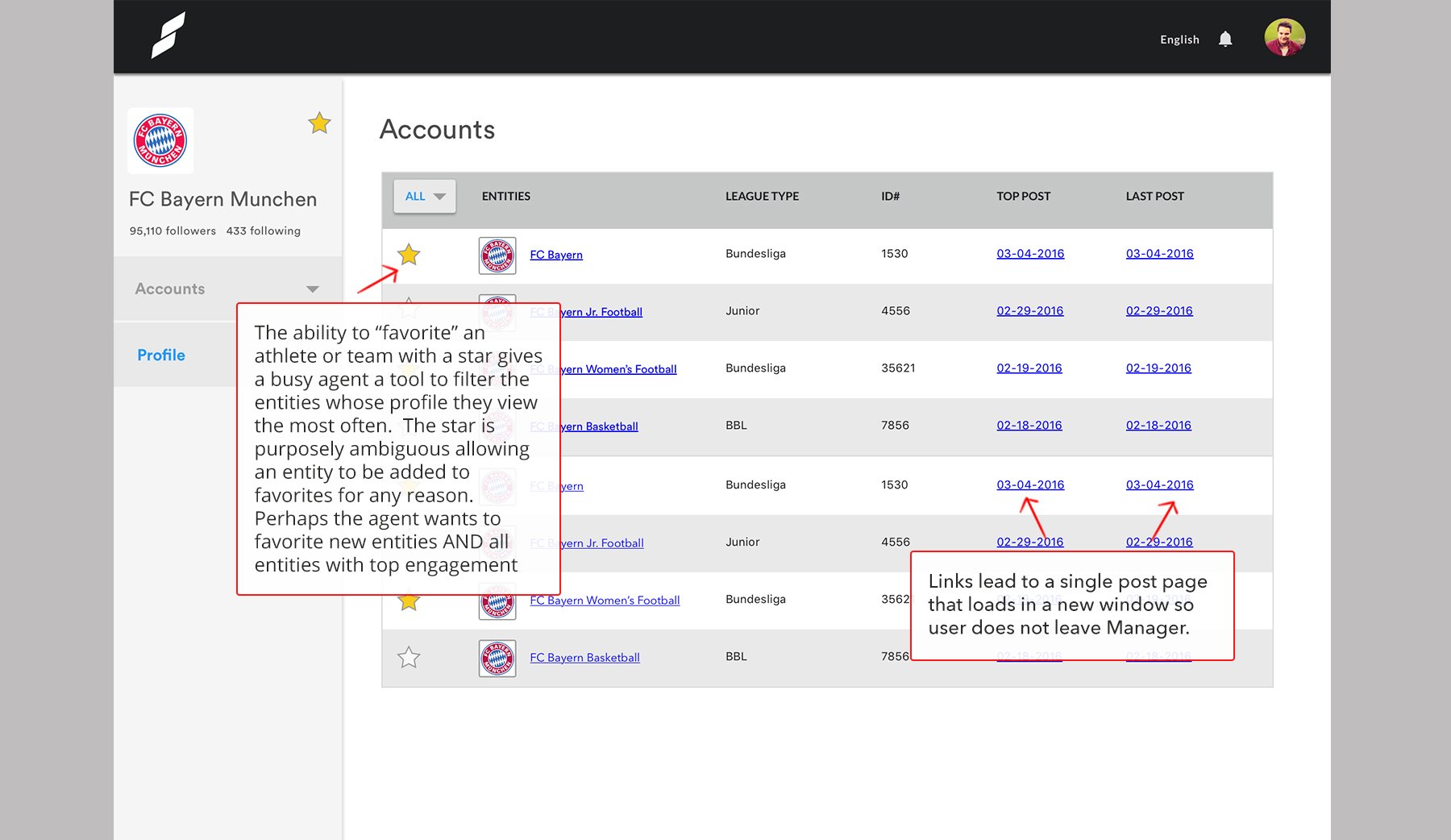
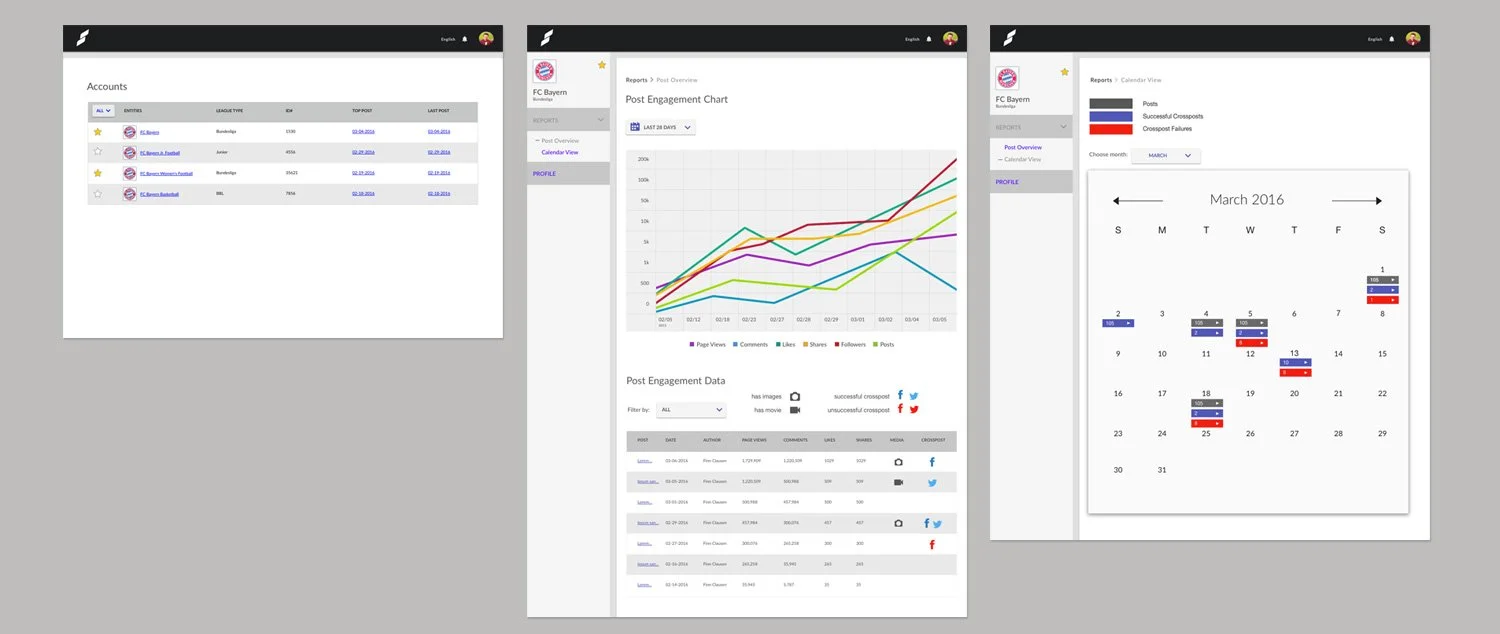
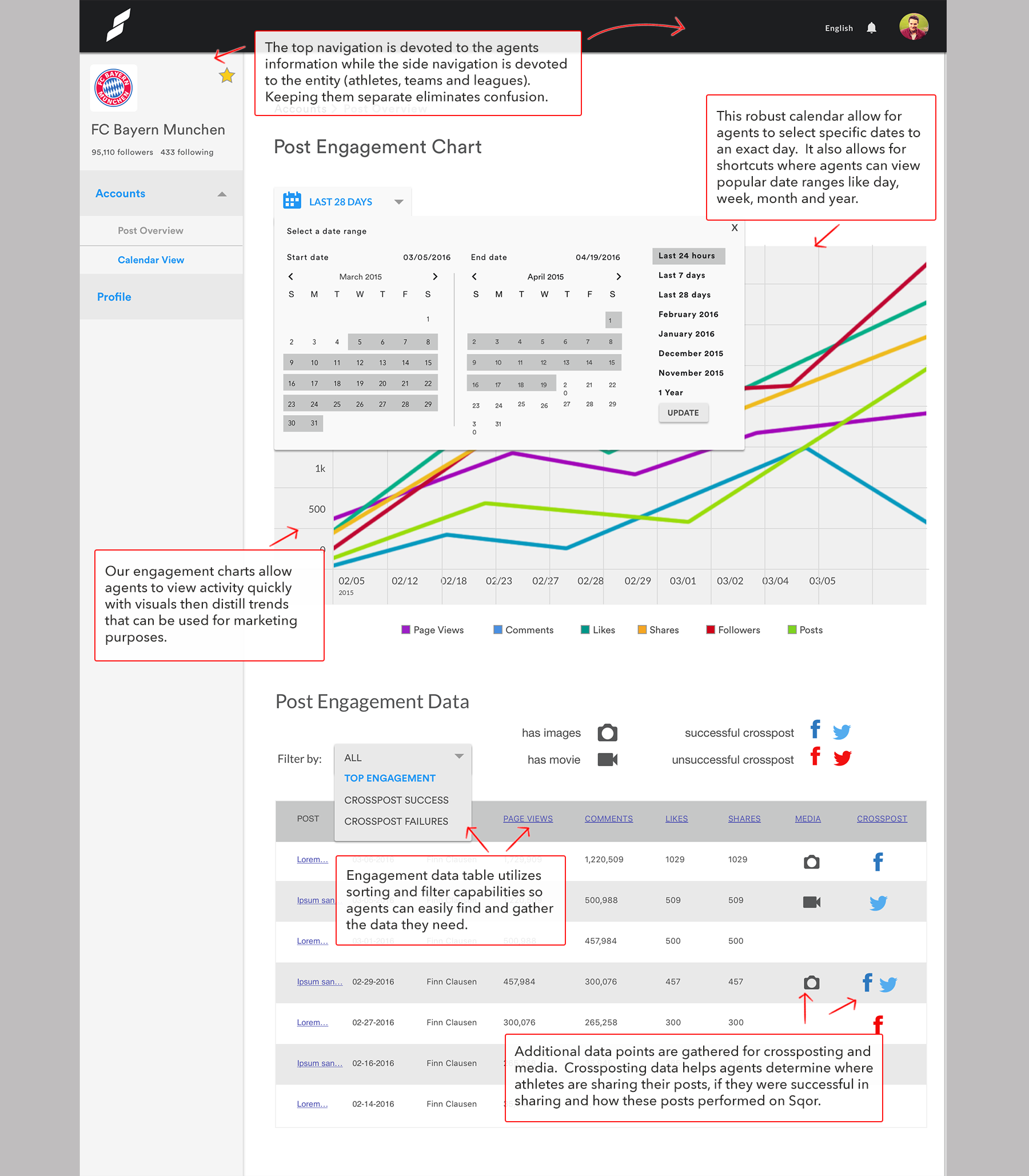
Useful engagement end points for the MVP
Useful engagement endpoints for the MVP. For the MVP, we designed and built three pages with an accounts table, followers, page views, and successful crossposts.
Version 2 - Streamlined user profile forms
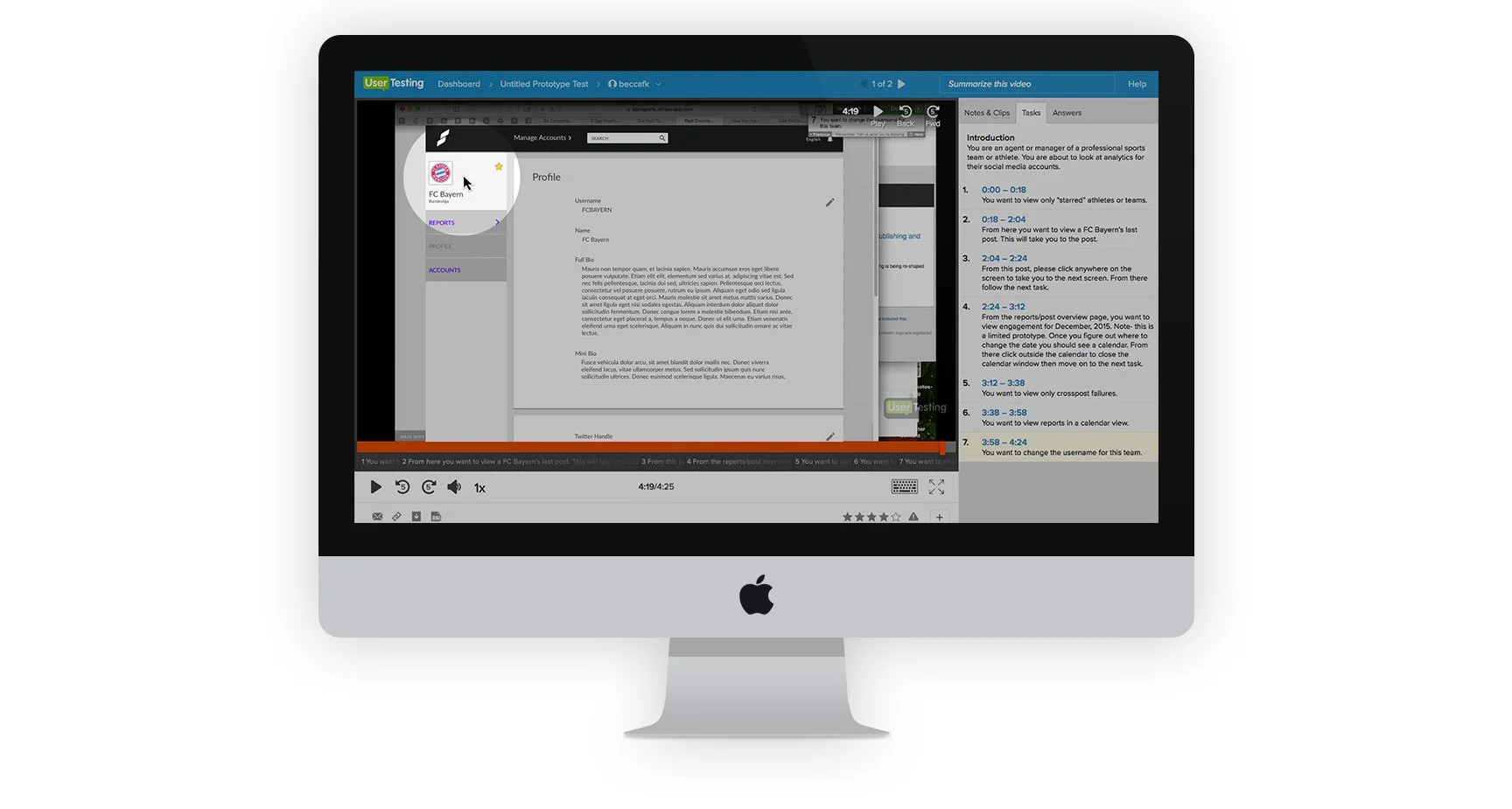
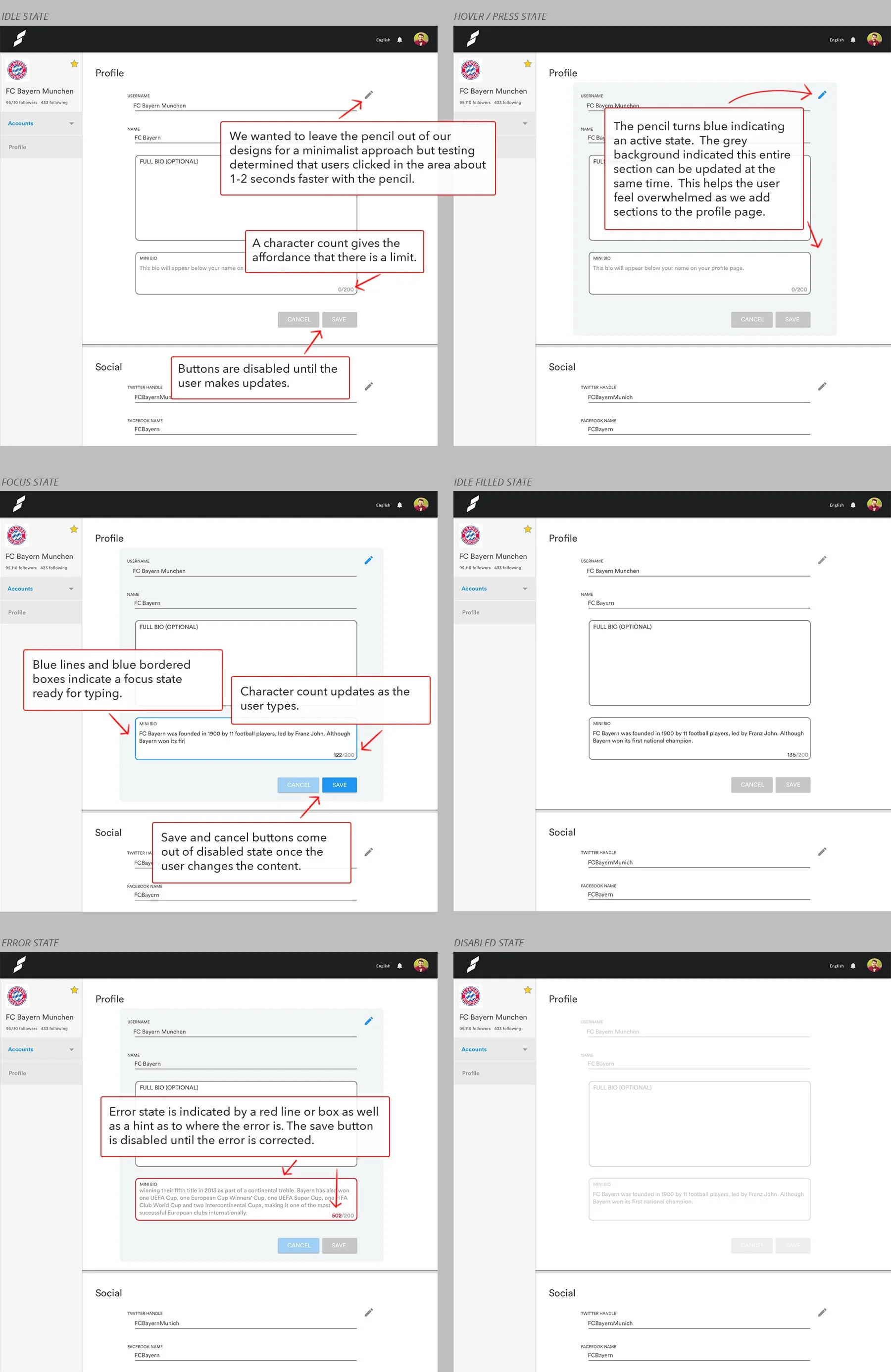
The old system required athletes to email our internal agents basic profile information such as names, teams, leagues, etc. For version 2, we designed and built a set of forms so athletes could create profiles themselves. After conducting usability tests on usertesting.com, we quickly identified that most users want to update names and avatars inline instead of going through the athlete’s profile.
Version 3 - Permission setting for posting on an athlete’s behalf
Agents who already have a working relationship with their athletes still need to request permission to post on their behalf. This step protects everyone in the relationship, including Sqor. The flow below demonstrates a request to represent an athlete as well as options to terminate a relationship from both sides. When a new representation is requested, an email is sent out to the athlete requesting a response and taking them directly to the interface where they can grant access. Once access is granted, agents are alerted and encouraged to create a first post. This notification brings agents to the tool and gets them posting right out of the gate.
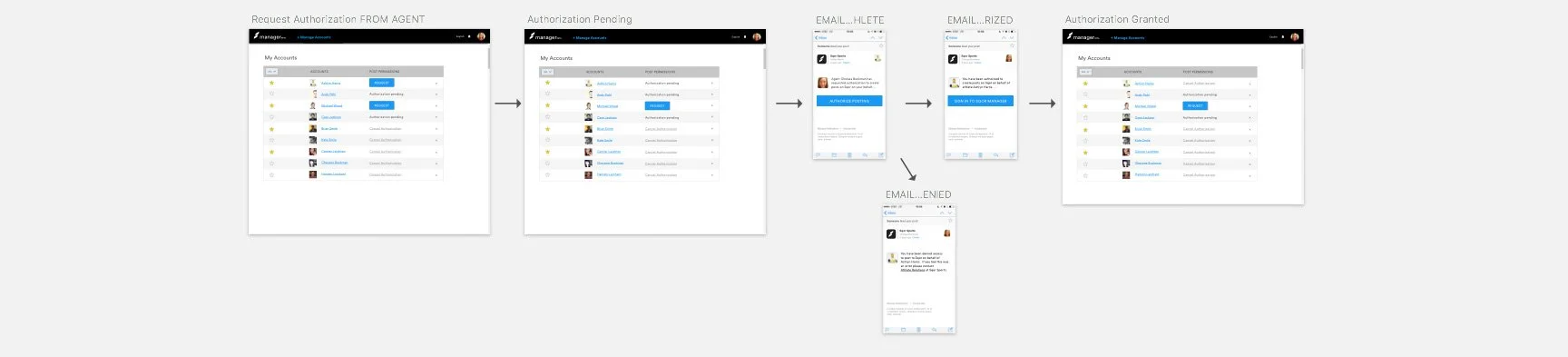
Athlete to Agent authorization flow

Version 4 - Optimizing Site Architecture
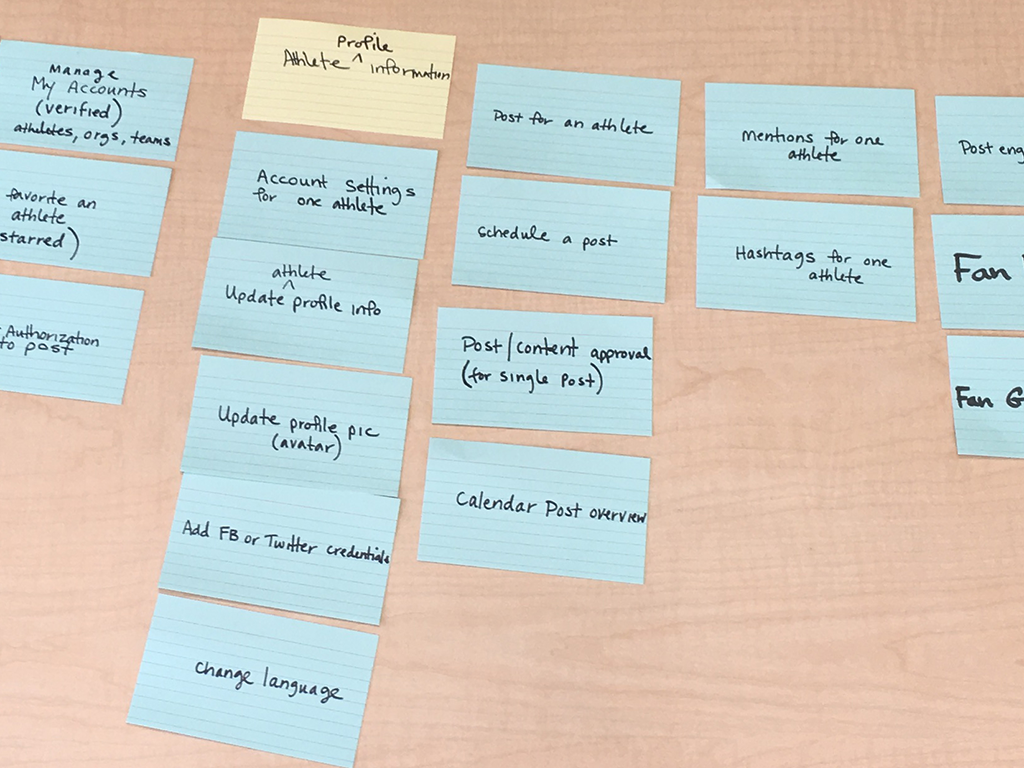
Simultaneous to optimizing the first three versions, I initiated a card sorting exercise with our in-house athlete relations team to determine the future architecture of the site. From this exercise, we moved the agent/athlete messaging feature and the monthly payment tables to the main navigation to make them more easily accessible.


Impact
Streamlined the athlete-to-agent authorization flow, enabling agents to post on athletes’ behalf and increasing publishing volume 4×. This drove a cascade of wins, including engagement gains of up to 300% among top athletes
Over 1.5 years at SQOR Sports, we grew monthly active users from 75,000 to 650,000 and expanded our athlete and sports team network from 175 to 2,000+.