
Internal Tools Overview
I designed internal tools that helped Pinterest’s marketing teams create and launch user experiences more efficiently. Two major projects, “Survey” and “Journeys”, began with multi-day workshops using research and other discovery methods to uncover needs, workflows, and pain points. I also designed the public-facing survey experience, giving me an end-to-end perspective on this particular experience.
This case study focuses on the Survey Creation tool.
Internal tools were fragmented, difficult to use, and not scalable. Product marketing managers were the people who knew how to navigate these tools, including the workarounds and nuances that had developed over time. To redesign the experience, I needed to understand how the tools worked today and what marketing managers were actually trying to accomplish.
The Challenge
Conduct stakeholder interviews and workshops with product marketing managers to understand real workflows, pain points, and desired outcomes; then translate those insights into requirements. Next, partner with PMs and engineers to balance user needs, technical feasibility, and delivery timeline.
The Solution
Phase One - Research & Discovery
I started with individual stakeholder interviews, asking each product marketing manager to walk me through how they used the existing tool, including workflows, pain points, and workarounds. Once the interviews were complete, I facilitated a multi-day workshop to identify the underlying jobs and desired outcomes that the marketing managers needed to achieve.
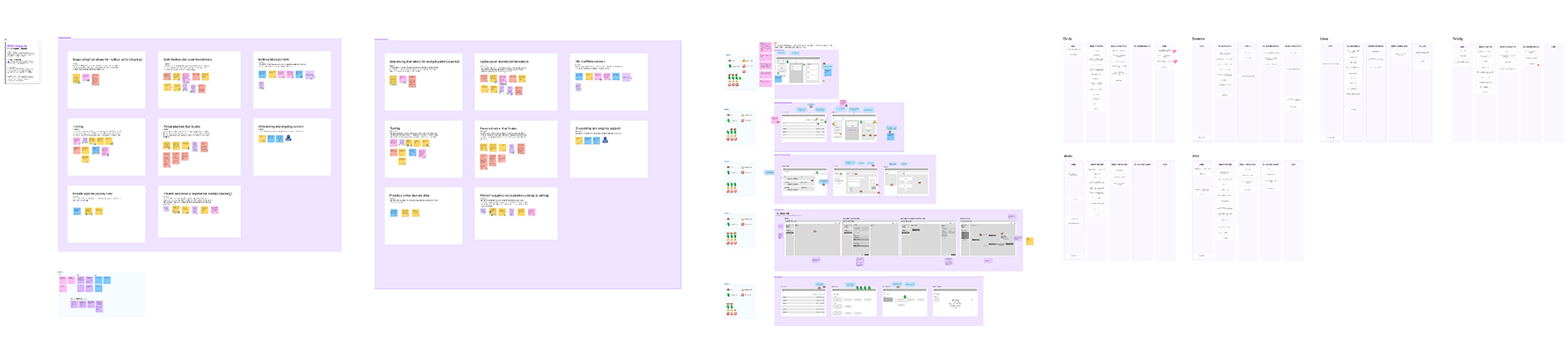
Bird’s-eye view of the Survey’s workshop in Figjam. Activities included writing outcome statements, a card sorting exercise, and reacting to a first pass at wireframes.
Phase Two: Requirements & Service Blueprint
I worked closely with our product manager and engineers to translate the research findings into clear product requirements and a service blueprint, aligning on user needs, technical feasibility, and the experience we needed to support.
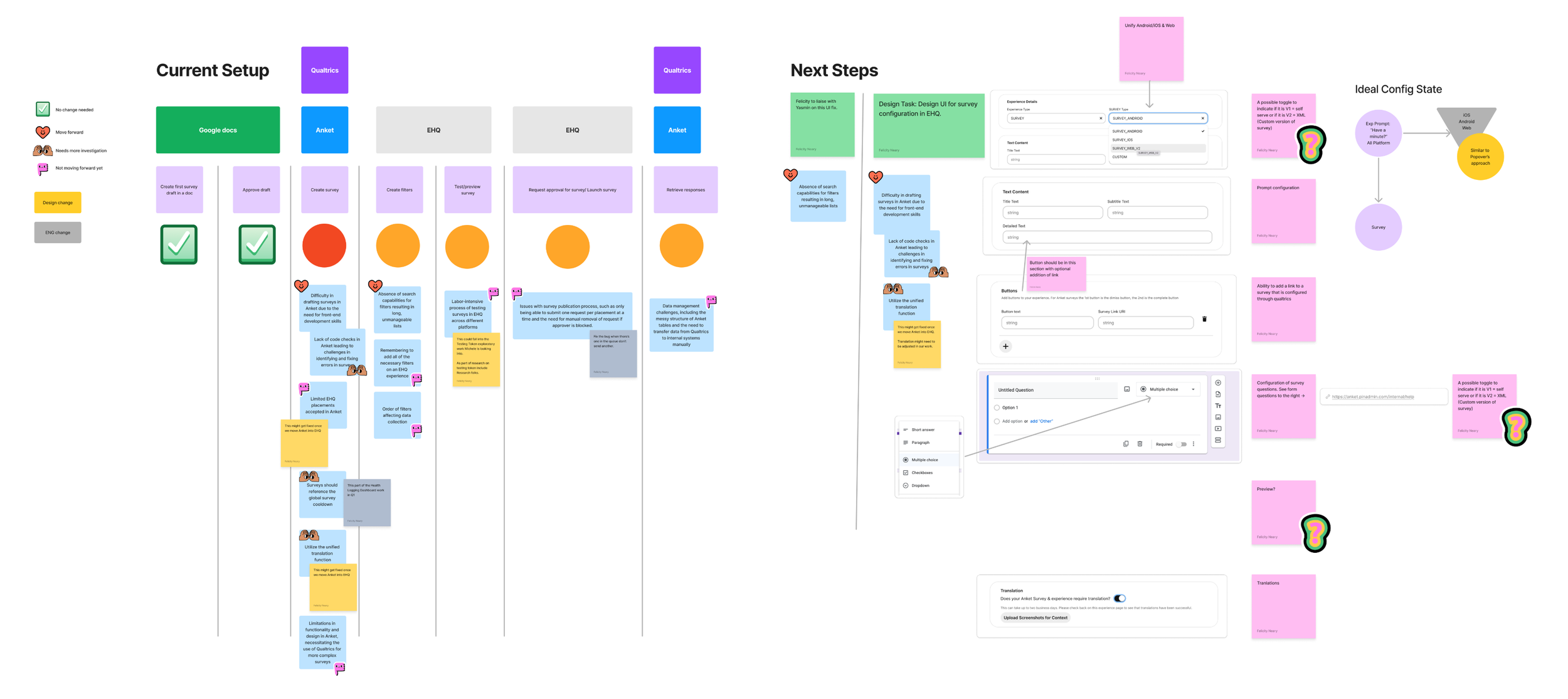
Survey’s service blueprint
Phase Three: Design & Feedback
Next, I worked closely with engineers to design a scalable, self-service tool that enabled non-technical teams to create and manage survey experiences more independently.
I also incorporated internal-tool-specific design system components. This created a more consistent experience across tools while giving teams reusable patterns instead of solving the same interaction problems from scratch. It also made the designs easier to build, maintain, and scale as new internal tools were developed.
Throughout the design process, I worked closely with PMs, engineers, and marketing managers to gather feedback, validate decisions, and refine the experience based on both user needs and technical constraints.
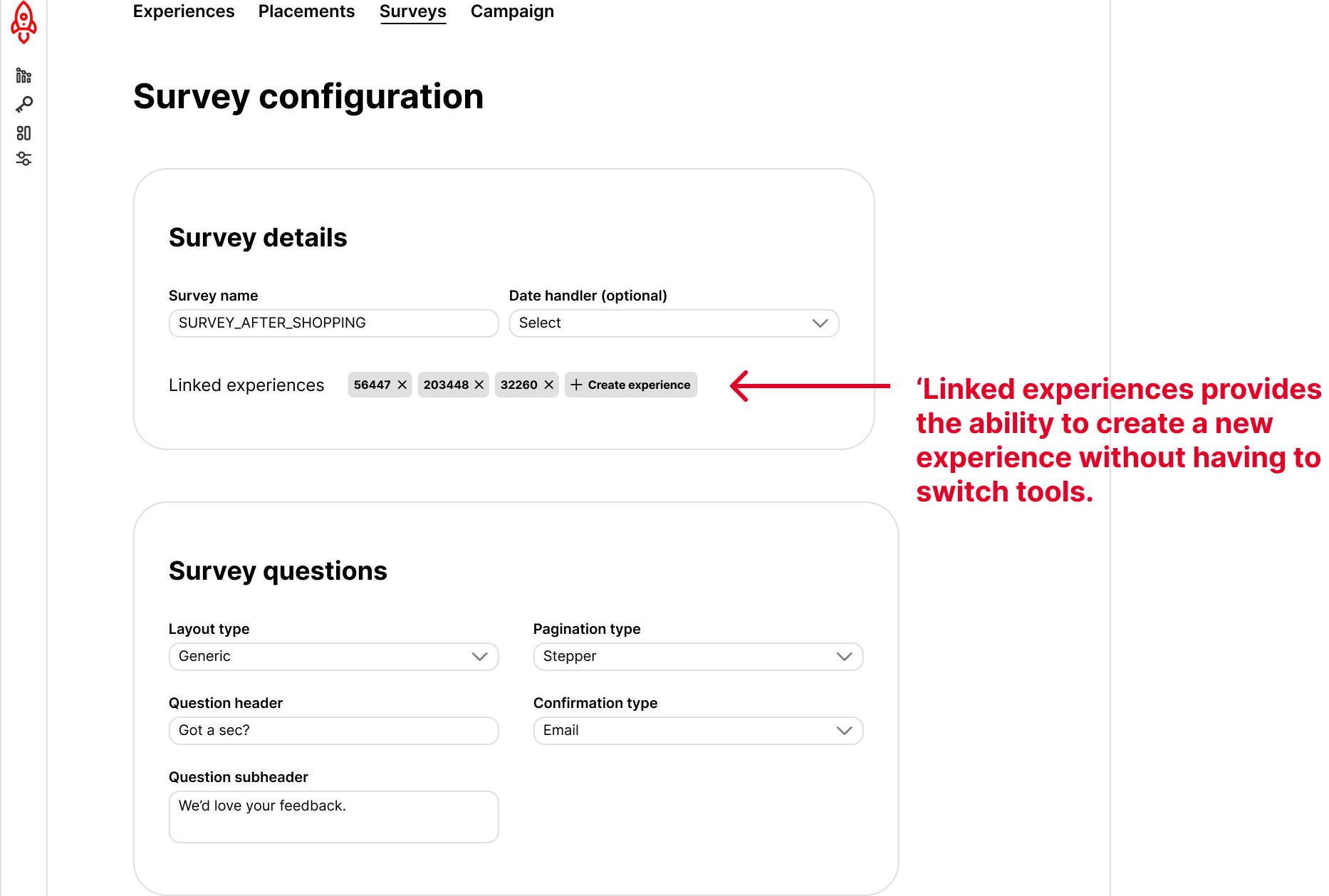
Survey setup
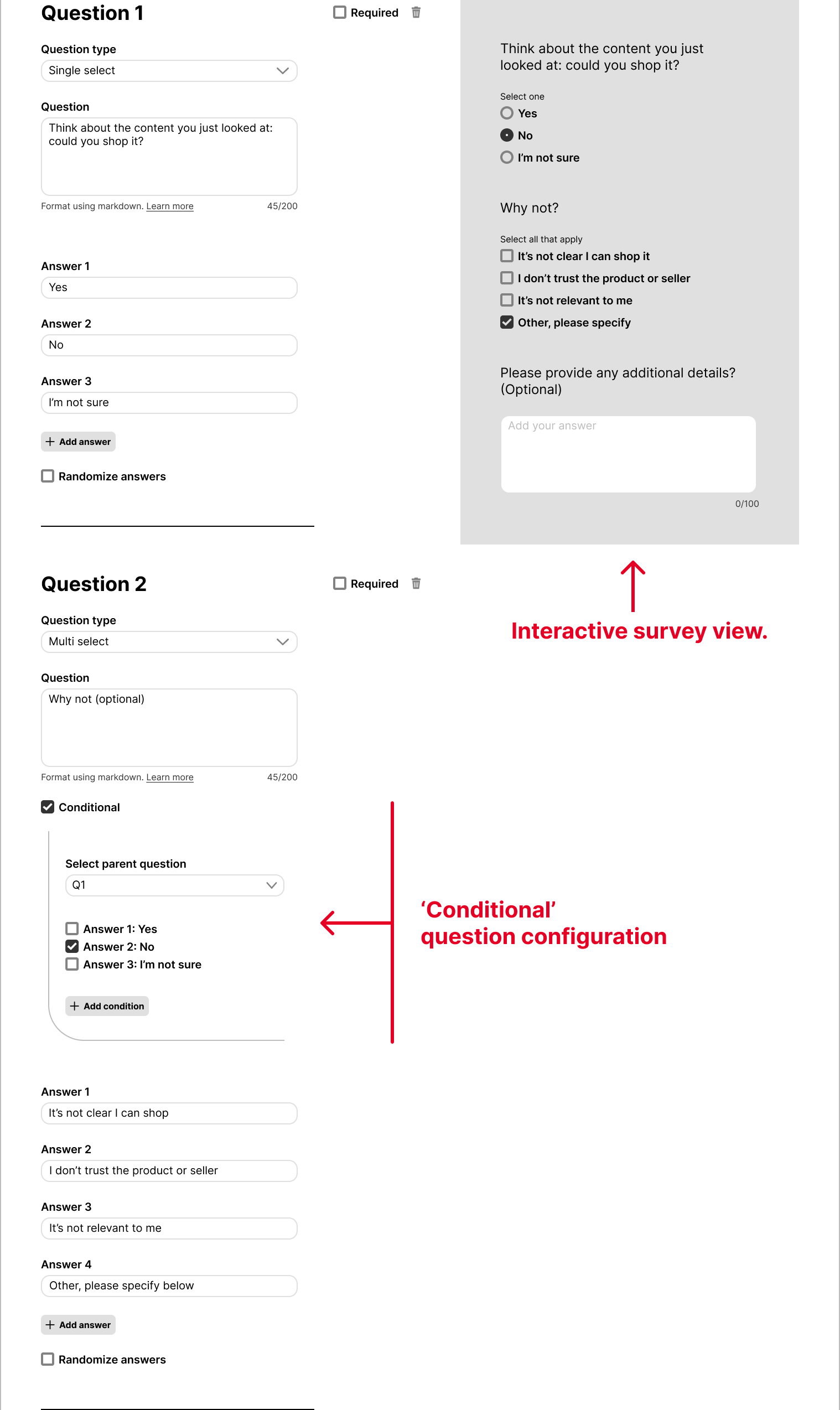
Question configuration